View as agent
This is what an AI agent reads. Same page, second kind of user.
Every page on this site has a markdown version that agents can read, cite, and act on, with links that lead to more markdown. Your software is getting the same new user. We help make it ready.
/case-studies/ai-reimbursement-eligibility-engine.md163 lines · 7 KB · text/markdown
---title: "AI Reimbursement Engine for DME | Case Study"description: "How we built a generative AI engine that scores DME reimbursement likelihood against Medicare and Medicaid policy, before the device ships."url: https://appstream.studio/case-studies/ai-reimbursement-eligibility-enginemarkdown_url: https://appstream.studio/case-studies/ai-reimbursement-eligibility-engine.md--- [Home](https://appstream.studio/index.md) · [Work](https://appstream.studio/case-studies.md) Healthcare Healthcare/ Engineer # Score reimbursement likelihood before the device ships. A DME startup was writing off revenue because nobody could predict which placements would get reimbursed. We built an AI engine that checks every case against Medicare and Medicaid policy before anything goes out the door. Client Healthcare Startup (DME) Engagement Ongoing Focus AI Agents + RAG Compliance HIPAA, Medicare, Medicaid 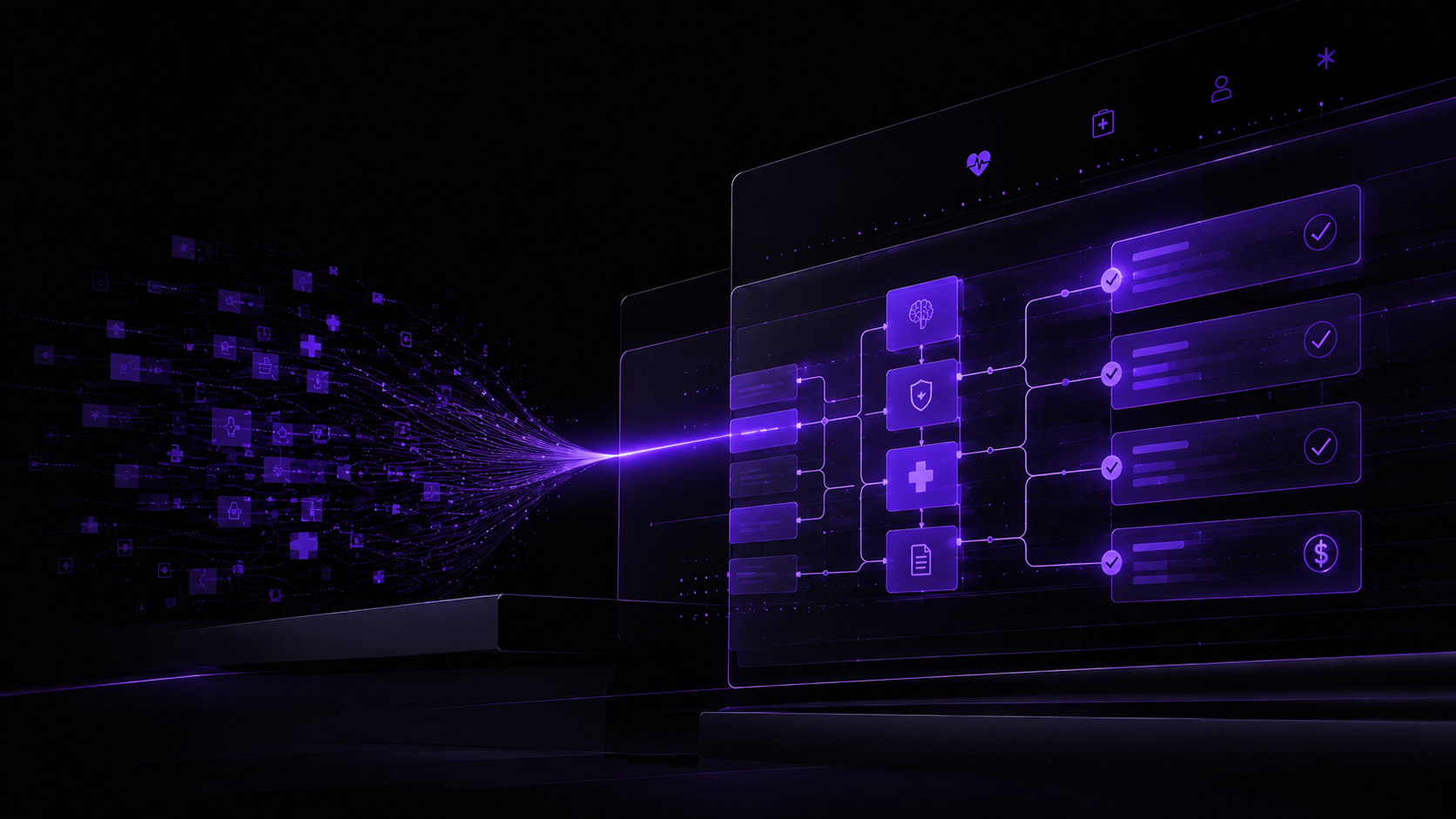 01 ## The work A healthcare startup in the durable medical equipment space, running patient programs that provide medical devices under Medicare and Medicaid coverage. Industry-wide, an estimated 20 to 50 percent of DME placed in the field fails reimbursement and gets written off. What was getting in the way - A meaningful share of devices shipped were never reimbursed. Equipment and effort turned into bad debt.- Eligibility logic was scattered across staff, binders, and tribal knowledge. No two people applied it the same way.- Checking reimbursement meant manually cross-referencing Medicare and Medicaid rules against patient records. It didn't scale.- There was no system to score how likely a case was to be paid, or flag what documentation was missing.- When payers denied claims, the team couldn't quickly build a structured argument for medical necessity. 02 ## What changed Train AI on real policy. Feed it real patient data. We took the specific Medicare and Medicaid policies relevant to the client's DME portfolio and structured them into a knowledge layer the AI could reason over. Organized by device type, program, conditions, thresholds. 03 ## What we built Then we connected it to live patient data from their EMR via HL7 and FHIR. Diagnoses, clinical history, program enrollment, device data. All normalized and governed for PHI compliance. The engine matches each case against the relevant rules, produces a reimbursement score, and explains which criteria are met, which are borderline, and what's missing. Staff see the answer before the device ships. If a claim gets questioned later, the documentation is already there. Under the hood, the engine runs on Anthropic's Claude models: Opus 3 for the heavy policy reasoning and Sonnet for faster, high-volume scoring. Our team built it with Claude Code, which let a small crew move through the policy structuring, integration work, and testing much faster. AI Agents RAG Pipelines System Integration HL7/FHIR Integration HIPAA Audited 04 ## How it works - AI engine trained on the Medicare and Medicaid rules that actually govern this client's DME categories- Live patient and clinical data flowing from the EMR via HL7 and FHIR into the scoring engine- Per-case reimbursement scores with plain explanations of what's satisfied and what's not- High-risk cases and missing documentation flagged before a device goes out- Justification material for audits and appeals, generated from the same scoring run- A platform built to extend as new device types, programs, and payer rules come in 05 ## Business impact industry write-off rate 20-50% Of DME placed industry-wide fails reimbursement. That's the baseline we're fixing. scoring Real-time Per-patient reimbursement likelihood, checked before the device ships documentation Audit-ready Justification tied to specific Medicare and Medicaid rules, generated automatically > “We used to guess. Now we know before we ship whether a placement will get paid.” Founder , DME Healthcare Startup 06 ## What’s next Stop writing off revenue you should be collecting If reimbursement decisions at your organization depend on tribal knowledge and manual policy review, we should talk. [Talk to an AI engineer](https://appstream.studio/schedule-a-discovery-call.md) · [More work](https://appstream.studio/case-studies.md) Team - Justin Tannenbaum Solutions Architect- Lukasz Chmielewski Lead Engineer- Mikolaj Kaminski Engineering- Daniel Bukala Product Manager Stack .NET · C# · Azure · Semantic Kernel · Claude Opus 3 · Claude Sonnet · Claude Code · HL7 · FHIR Related - [Engineer](https://appstream.studio/solutions/engineer.md)- [Agent Engineering](https://appstream.studio/solutions/agent-engineering.md)- [Agent Knowledge Layer](https://appstream.studio/solutions/agent-knowledge-layer.md)- [Agent Operations](https://appstream.studio/solutions/agent-operations.md)- [Healthcare](https://appstream.studio/industries/healthcare.md) More work ## Keep reading. [All work](https://appstream.studio/case-studies.md) - [Healthcare/ Engineer · Operate A scheduling engine on a legacy EMR books 250,000 appointments a year. Read the case study](https://appstream.studio/case-studies/healthcare-scheduling-transformation.md)- [Proptech/ Engineer A 50-state buy-side marketplace, with search that understands intent. Read the case study](https://appstream.studio/case-studies/buy-side-marketplace-agentic-search.md)- [Private Equity/ Engineer · Operate One AI assistant answers HR questions across every acquired company. Read the case study](https://appstream.studio/case-studies/enterprise-genai-people-operations.md) --- ## AppStream Studio AppStream turns frontier AI capabilities into production systems that perform real work. Talk to an AI engineer: https://appstream.studio/schedule-a-discovery-call · Email: contact@appstream.studio - [Home](https://appstream.studio/index.md)- [Solutions](https://appstream.studio/solutions.md)- [Advise](https://appstream.studio/solutions/advise.md)- [Engineer](https://appstream.studio/solutions/engineer.md)- [Operate](https://appstream.studio/solutions/operate.md)- [Govern](https://appstream.studio/solutions/govern.md)- [How we work](https://appstream.studio/how-we-work.md)- [Work (case studies)](https://appstream.studio/case-studies.md)- [Industries](https://appstream.studio/industries.md)- [Insights](https://appstream.studio/blog.md)- [Partners](https://appstream.studio/partners.md)- [About](https://appstream.studio/about-us.md)- [Contact](https://appstream.studio/contact.md) Agents are becoming a second user of your software. Readable content is the start. Scoped, auditable access for agents to act is the next step.
Talk to an AI engineer